City Heights thrive
in a varied and entertaining surrounding.

The Eagle’s Nest is not a flat in a luxurious ghetto for which you pay 300.000 £ to 500.000£ and see only the other neighbour luxurious flats outside your luxurious flat with as low ceilings as in your own flat. Here you live close to the sky and at the same time in the vibrant middle of an old and modern city of people from all over Britain and all over the world.
In this flight-photo of City Heights (within he green line; 2308’s six windows in red) one sees on the other side of the river Irvell the Manchester Chathedral, The National Football museum, and the Cheetham Music School, Harvy Nichols, Selfridges and the huge shopping centre Arndale at the Exchange Square. At the same side of the river, the bilding with a sharp coner at the right is the residence of Pep Guardiola, seen as the most clever and successful football manger ever.

The Manchester Cathedral with roots from the medieval ages is our closest neighbour and receives many prominent guests over the years.

The enterance to Arndale, Manchesters’s enourmous shopping centre, the biggest in Britain and said to be on top even compared to Euroope and with only little com;etions from its famous neighbourgs Harvey Nicholz, Selfrige, Zara and M&S.
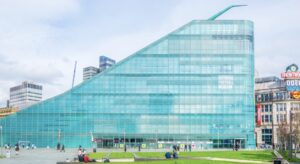
The magnificent tribute to local football manifests in the light-blue six store glass-building where The National Football resides, and where else but in Manchester City.
click on the pictures for bigger versions
click on the pictures for bigger versions
click on the pictures for bigger versions

A close-up of a detail of the Memorial of the many young people massacared of a muslim Jihadist. Prince William mentioned at the inauguration his own suffering when having lost a close person. City Heights in the left background

A glimps of Exchange Square from the enterance of Arndale Supermarket, a European gigant. The Tranway on the way in to its station and Selfridges’s yellow facade and City Heights in the background with 2308 behind the Premier Inn logo on top.
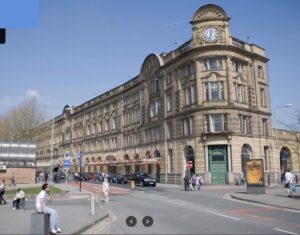
The magnificent nineteenth century facade of the railway station named after the then Queen Victoria.